What actually happens on the day — what you make, the techniques we cover, the picture-book library we lean on, and the club that keeps it going afterwards.
People ask me what the Children’s Book Workshop is like, and I never manage to answer it well in a sentence. It isn’t a lecture, and it isn’t a paint-along. It’s a day where you start building something of your own, with the room, the materials and the reference books all laid on around you.
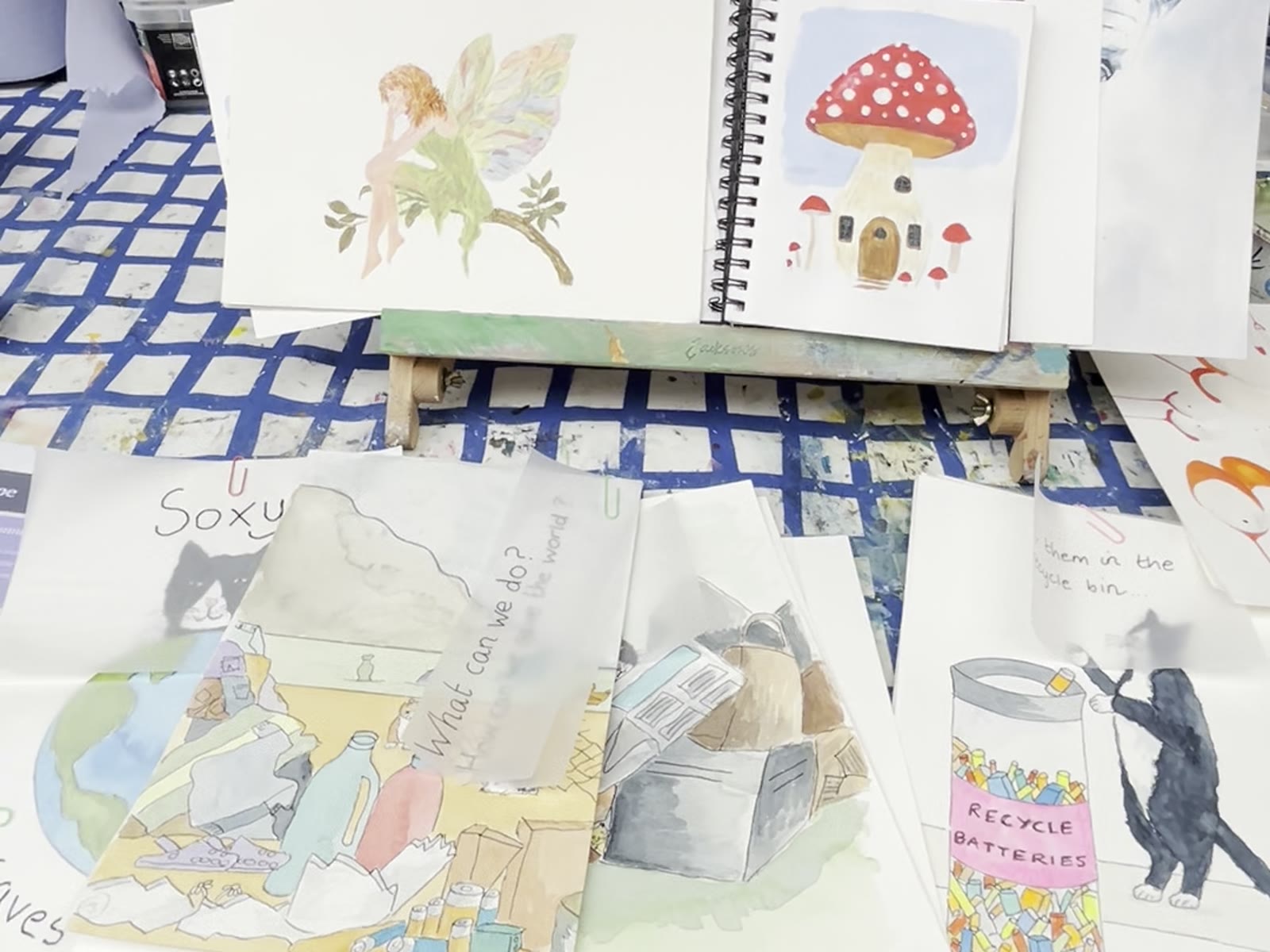
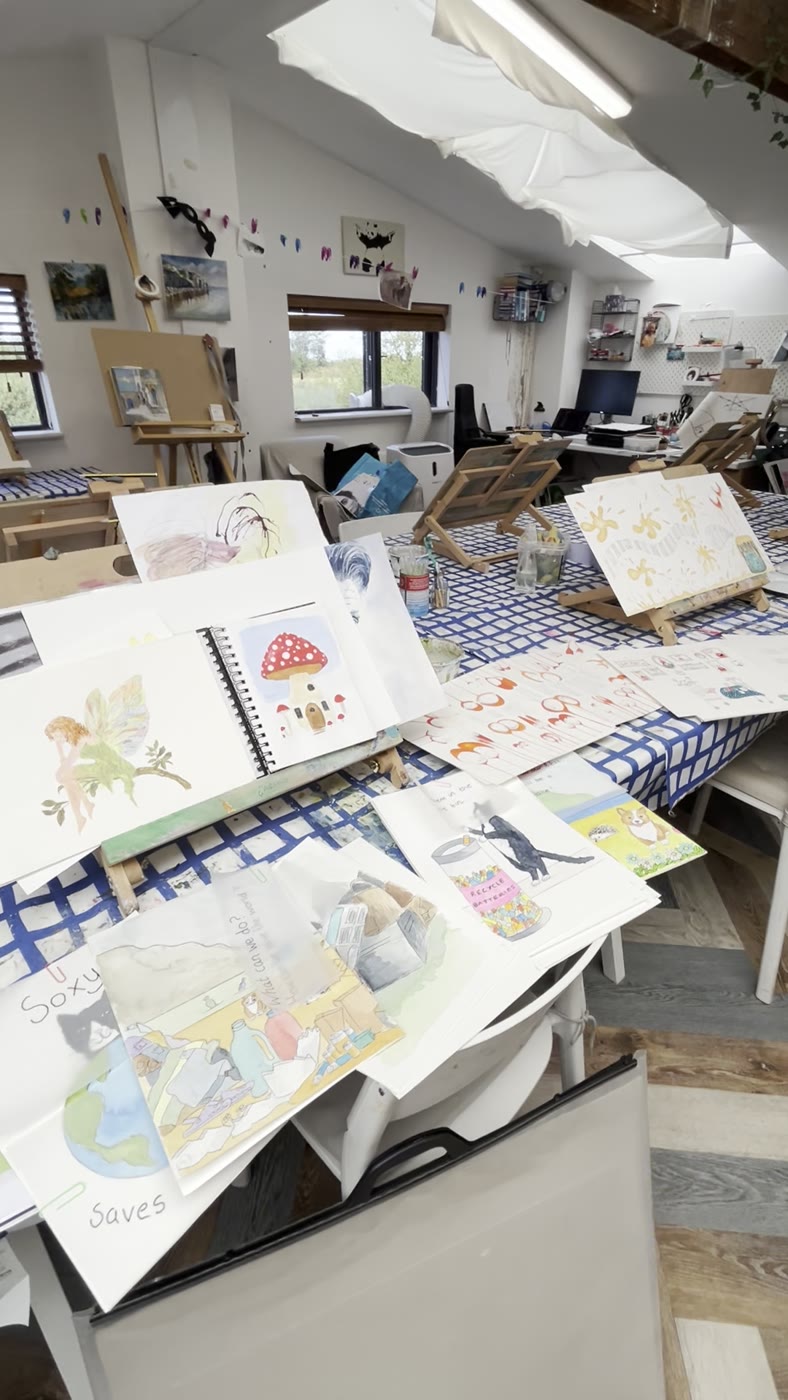
So here is the long version. I filmed it in the studio on a workshop day, with the tables set and the last group’s work still out. Three minutes, no rush.
You leave with the bare bones of a book
That’s the part people are most surprised by. You don’t go home with a single finished illustration — you go home with the beginnings of an actual book. Characters that exist. A story that has a shape. Pages that are starting to sit in an order that works.
The target is a storybook dummy: the rough, full-size mock-up that publishers and illustrators use to test whether a picture book actually functions before a single final piece of art gets made. Yours won’t be finished by the end of the day — nobody’s is — but it will be started properly, and you’ll know exactly how to carry it on.
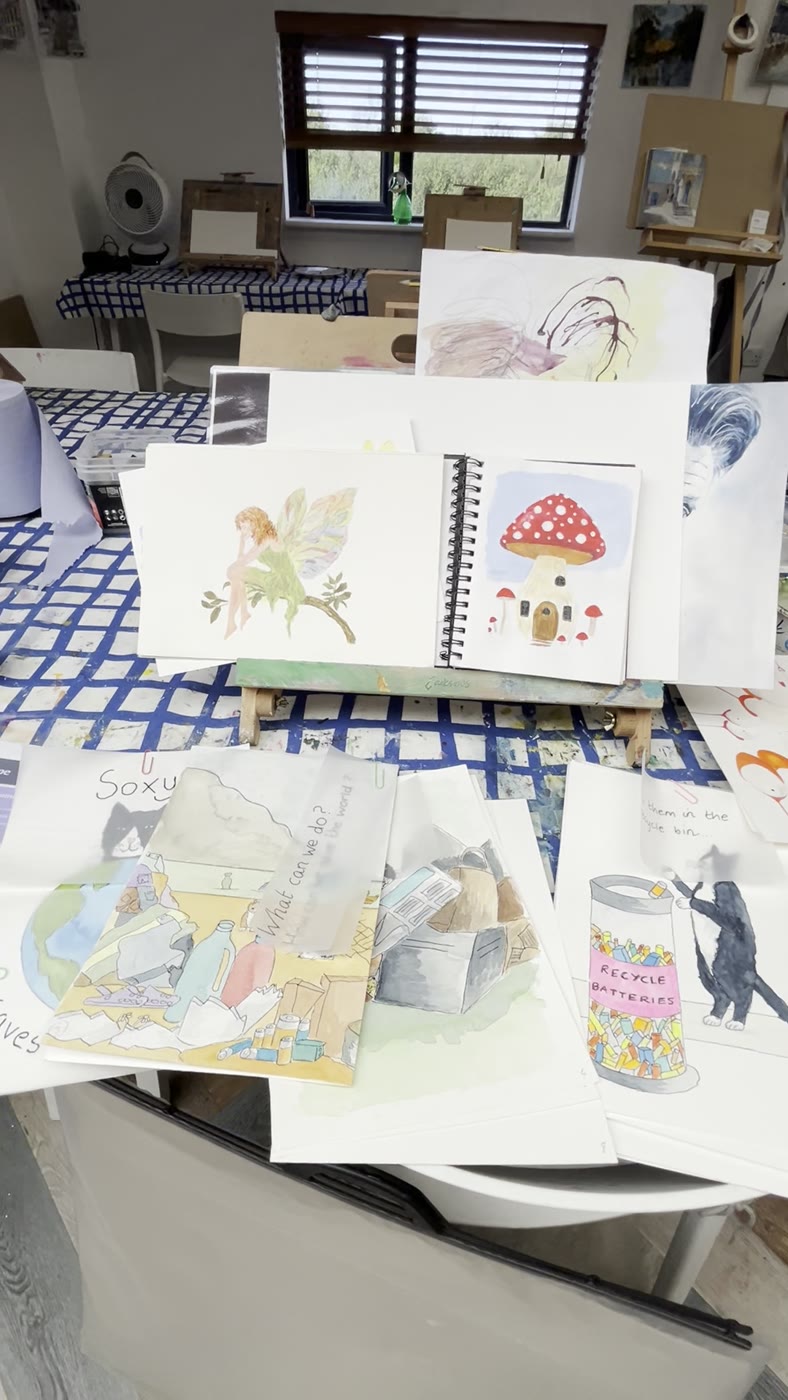
The techniques we actually cover
The illustration side is about making marks that carry a story rather than marks that merely describe a thing. We work on:
- Simplifying. The single hardest habit to build, and the one that separates a picture that reads instantly from one that doesn’t.
- Mark-making for backgrounds. How to suggest a wood, a kitchen, a whole weather system, without labouring every leaf.
- Scene setting. Where to put the camera, what to leave out, how a spread carries the eye across to the page turn.
- Character development — in pictures and in words. Defining who someone is, then bringing them to life on the page. The writing and the drawing are the same job here, and we treat them that way.
You don’t need to arrive able to draw well, and you don’t need a story ready. Plenty of people turn up with nothing but a vague feeling about a character, and that is a perfectly good place to start.
The library we lean on
The studio has a large children’s book library, and it isn’t decoration — we pull books off the shelf all day. Quentin Blake, Maurice Sendak, Oliver Jeffers, Crockett Johnson. When you can’t work out how to handle a background, or how much to leave unsaid, the answer is almost always already sitting on that shelf in a book somebody wrote for five-year-olds.
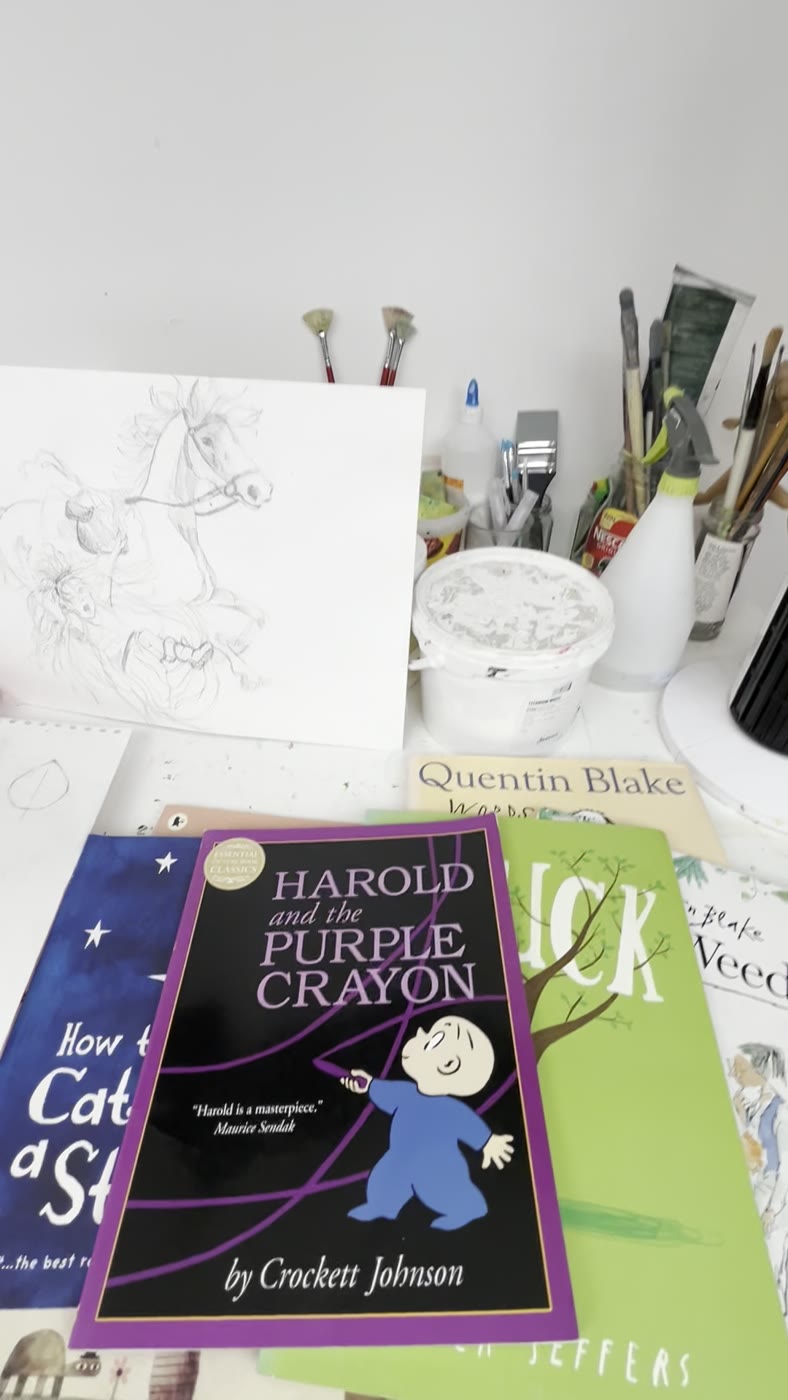
If you want to know why I rate these books so highly as a teaching tool, I’ve written about the shelf in more detail in The Picture-Book Shelf.
Everything is supplied
Paper, brushes, paints, inks — whichever direction you want to take it. Acrylics, watercolour, line and wash, or pencil the whole way through. You choose the medium that suits the book you’re making rather than the one I happen to have put out.
Tea and coffee run all day, and there’s cake from the café. Bring yourself; that really is the whole list.
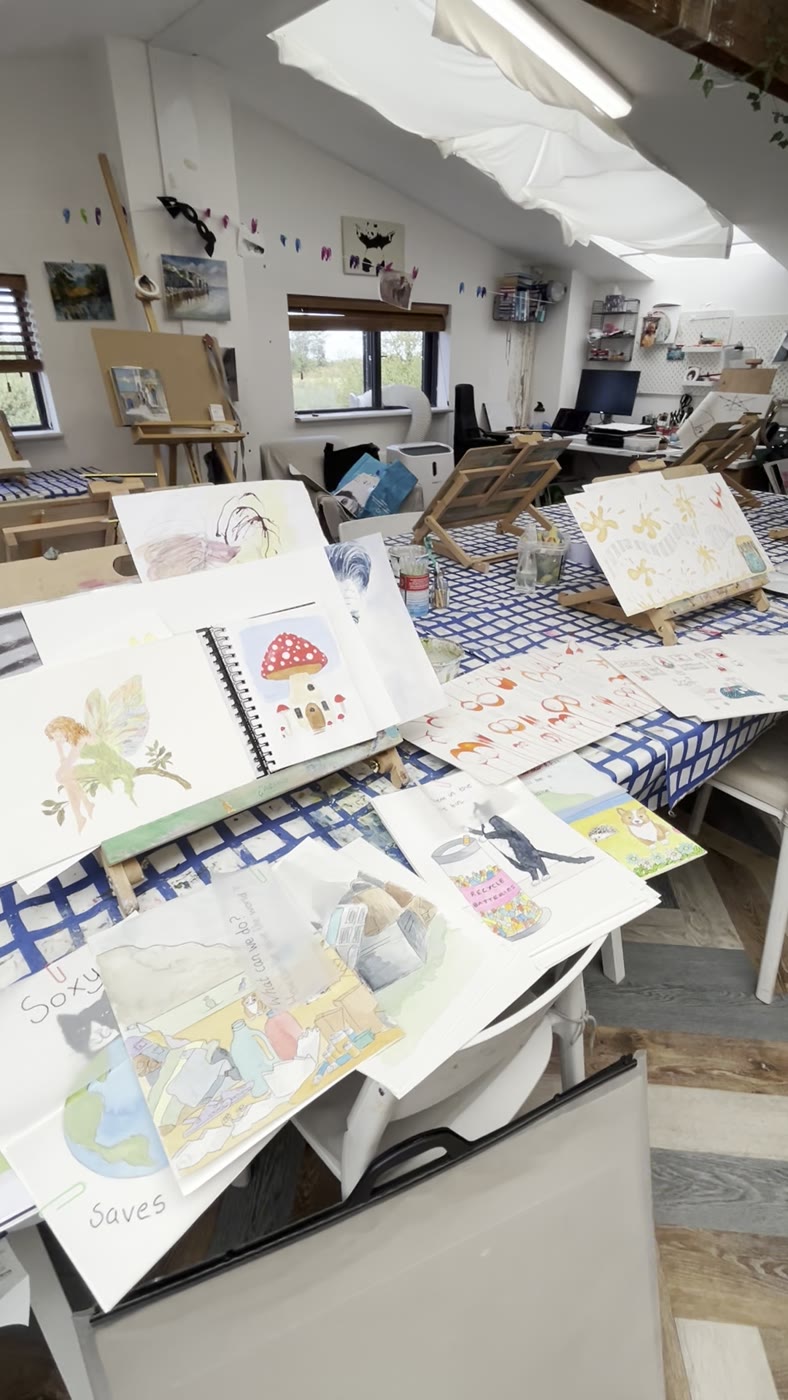
It doesn’t end when the day does
This is the bit I’m proudest of. Every cohort that comes through the workshop has gone on to keep meeting — there’s a monthly meet-up that has become genuinely popular, and it’s where the books actually get finished.
Because that’s the real problem with a one-day workshop, isn’t it. You leave full of it, and then life happens. The meet-up is the answer to that: you tick away at your book at home as a proper hobby, then once a month you bring it back in, show it to people who are working on the same thing, and get honest input. That is what keeps it moving.
You also go away with a PDF of the workshop structure, so the running order and the next steps are written down rather than half-remembered.
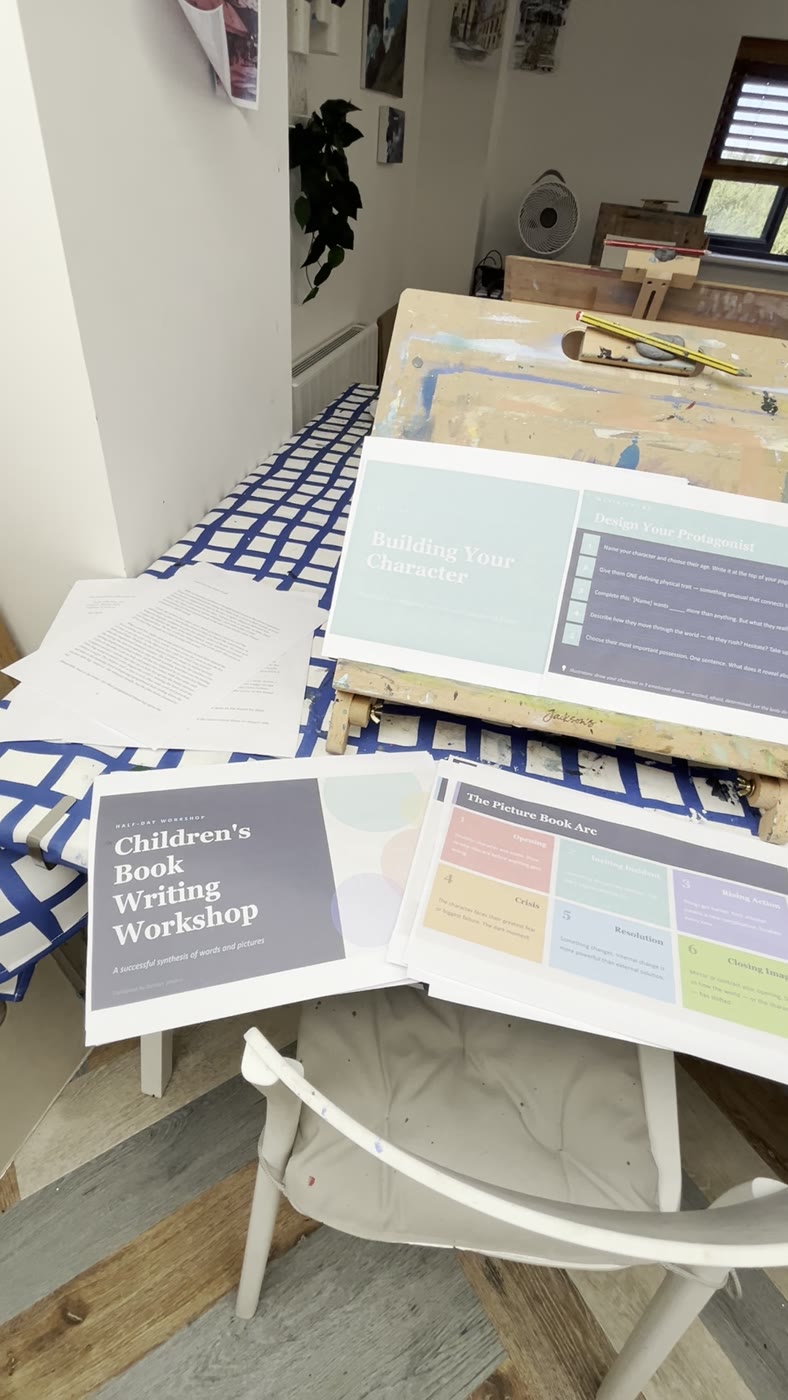
Come and make one
If you’ve had a picture book in the back of your mind for years — and a lot of people have — this is a good, low-stakes way to finally start it. Come and do some world-building with us.